Autonomous vehicles: cybersecurity shifts into a higher gear
On October 23 2026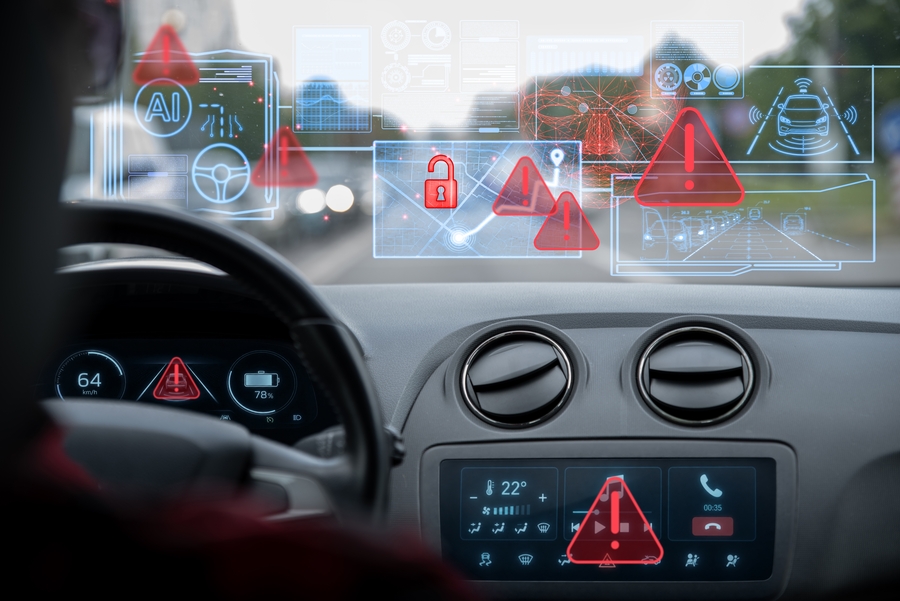
Connected and autonomous vehicles rely on electronic networks and sensors to exchange data with their surroundings. Their safety therefore also depends on their ability to withstand a wide range of cyberattacks. At Télécom SudParis, researcher Badis Hammi studies how to detect these attacks.
In recent years, automotive cybersecurity has become a regulatory requirement. In the European Union, the safety rules applying to all new vehicles since 7 July 2024 include measures to protect against cyberattacks. These cover cars, buses and heavy goods vehicles, among others.
An associate professor in cybersecurity at Télécom SudParis, Badis Hammi specialises in vehicle security. His work involves identifying vulnerabilities that could allow a vehicle to be compromised before attackers find them, and designing protection systems capable of operating on board in real-world driving conditions.
From engine to computer network
Beneath the bodywork, the electronic components of a connected and autonomous vehicle form a network through which the data needed to operate it constantly flows. This network carries communications with the outside world, instructions for driver assistance systems and commands controlling certain vehicle mechanisms. New architectures increasingly rely on Ethernet, a technology inherited from conventional computer networks. Yet while this interconnection makes it easier for information to circulate, it can also provide a route for an intrusion.
Badis Hammi describes a possible attack unfolding in several stages: an attacker would first gain access through the Bluetooth connection, then try to reach a central computer that would give them access to components controlling braking or acceleration. Working with automotive supplier Valeo, his team aims to detect this progression through the vehicle’s network and secure these architectures.
Read the full article on the Institut Mines-Télécom’s I’MTech blog.