Digital twins: behind the duplicate On October 30 2026 A digital twin is not merely a three-dimensional model, a stream of data or a simulation model —it is a bit of all of these at once. However, these elements must be integrated into an architecture capable of tracking a system throughout its entire lifecycle. After …
Continue reading “Digital twins: behind the duplicate”
Autonomous vehicles: cybersecurity shifts into a higher gear On October 23 2026 Connected and autonomous vehicles rely on electronic networks and sensors to exchange data with their surroundings. Their safety therefore also depends on their ability to withstand a wide range of cyberattacks. At Télécom SudParis, researcher Badis Hammi studies how to detect these attacks. …
Continue reading “Autonomous vehicles: cybersecurity shifts into a higher gear”
Discover Télécom SudParis’s Engineer-Entrepreneur program. Launch your startup with IMT Starter incubator without interrupting your engineering studies.
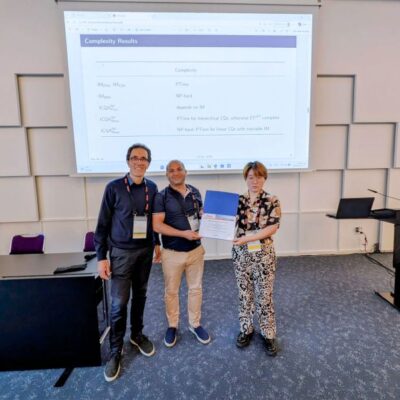
Badran Raddaoui and his team at Télécom SudParis received a Distinguished Paper Award at IJCAI 2026 for major research on AI reasoning and explainability when handling inconsistent data.
IMT and the University of Technology Sydney are strengthening their strategic partnership On June 25 2026 Following on from the strategic agreement signed in 2025 between the Institut Mines-Télécom (IMT) and the University of Technology Sydney (UTS), an Australian delegation was welcomed on 18 and 19 May 2026 to IMT Nord Europe on its Douai …
Continue reading “IMT and the University of Technology Sydney are strengthening their strategic partnership”
International Day of Women and Girls in Science marks its 10th anniversary, highlighting the progress made, the challenges faced and the actions needed to strengthen the role of women in science and technology.
Find out how the Proximate app won the Orange Prize at OpenTechDays thanks to its innovative approach to geolocation.
During his academic placement, Nicolas discovered what it means to work alongside academic staff, take part in scientific meetings, write code, conduct experiments, and sometimes have doubts — but also to make progress.
What is Edge AI and why is it important? Discover how artificial intelligence at the edge enables faster processing, reduced latency, and new applications across industries.
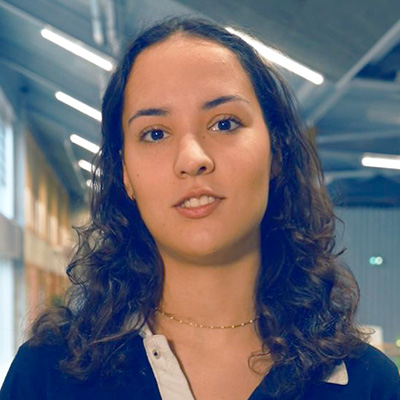
How can science become more inclusive? Answers with Julia Sartre, president of the Student Union at Télécom SudParis, who shares her journey and inspiring advice on the role of women in science.